
Quick answer: Yes, topical peptide serums and creams sold as cosmetics are legal and don't need special pre-approval in South Africa. SAHPRA's public warnings about unregistered peptide products mostly target a different category: injectable and ingestible peptides sold for bodybuilding or medical-style claims, not the serum in your skincare drawer.
Peptide interest in skincare has grown fast, and so has understandable confusion about whether it's actually regulated or safe to use. Some of that confusion comes from real, valid warnings, just aimed at a different type of peptide product than the one most people are asking about. This guide separates the two clearly.
Why Peptide Skincare Is Suddenly Everywhere
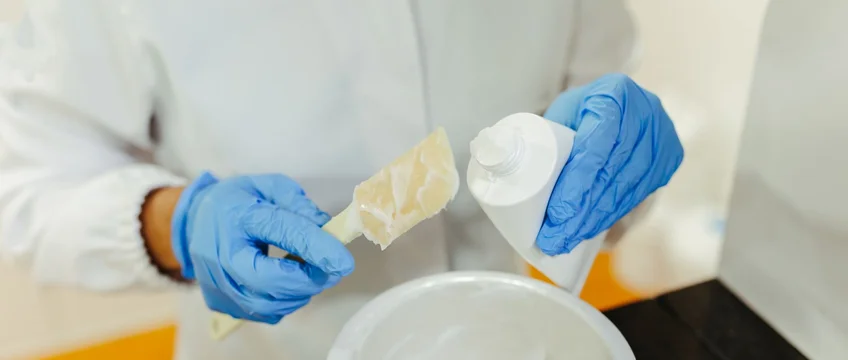
Peptide interest has grown sharply across search, TikTok and Instagram over the past couple of years, and South Africa is part of that curve. Peptides are short chains of amino acids that signal skin cells to behave differently, encouraging collagen production or calming inflammation, depending on the specific peptide. Formulation science has improved enough that they're now more stable and better absorbed than earlier versions, which is a big part of why they're replacing harsher actives like retinol for people with sensitive skin.
How South Africa Actually Regulates Cosmetics
Cosmetics sold in South Africa, including skincare serums and creams, fall under the Foodstuffs, Cosmetics and Disinfectants Act of 1972, overseen by the Department of Health with SAHPRA involved in licensing manufacturers and distributors and inspecting facilities for Good Manufacturing Practice. A standard cosmetic product, including one containing peptides, doesn't need individual pre-market approval the way a medicine does. The safety requirement is that it must not pose a health risk when used as intended.
Where things change is claims. A product marketed simply to improve the appearance of skin, reduce the look of fine lines, or hydrate, is operating as a cosmetic. A product marketed to treat, prevent or alter a diagnosed medical condition needs to be registered as a medicine, a much higher bar involving clinical evidence.
The SAHPRA Warning You've Probably Seen, and Why It's Different

SAHPRA has publicly warned about the growing sale of unregistered peptide products in South Africa. It's an important warning, and it's worth reading carefully, because the products it's aimed at are mostly injectable and ingestible peptides, things like BPC-157 vials sold online for muscle recovery, weight loss or anti-ageing health claims, not the topical serums sold by skincare brands for use on the face.
That distinction matters. An injectable or ingestible peptide enters your bloodstream and can affect your body systemically, which is exactly why SAHPRA treats products making therapeutic claims in that category as medicines requiring registration. A topical serum sits on the skin's surface and is regulated as a cosmetic instead, a fundamentally lower-risk category with a correspondingly different set of rules.
If you're specifically asking about a topical NanoPep, Society Peptide or Lumera Labs-style serum applied to your face, you're in cosmetic-regulation territory. If you're looking at an injectable peptide vial marketed for muscle recovery or systemic anti-ageing, that's the category SAHPRA's warnings are aimed at, and it deserves far more caution.
Topical Serum vs Injectable Peptide: Know the Difference
| Topical Serum/Cream | Injectable/Ingestible Peptide | |
|---|---|---|
| How it's used | Applied to skin surface | Injected or swallowed, enters bloodstream |
| Regulatory category | Cosmetic (Foodstuffs, Cosmetics and Disinfectants Act) | Medicine, if making therapeutic claims |
| SAHPRA pre-approval needed? | Generally no, if marketed as cosmetic | Yes, for therapeutic claims |
Shop topical peptide skincare from brands built for this exact category.
View NanoPep DealsHow to Choose a Trustworthy Peptide Skincare Brand
- Check for a full ingredients list. A brand confident in its formulation lists every ingredient, not just “peptide complex.”
- Look for a real distributor with contact details. A working South African or international contact point is a basic trust signal.
- Read the claims language carefully. “Reduces the appearance of fine lines” is a cosmetic claim. “Treats your medical skin condition” is a red flag from a product that isn't registered as a medicine.
- Patch test new products. Apply a small amount to your inner arm for 24 hours before using a new serum on your face, especially with active ingredients.
Frequently Asked Questions
Is peptide skincare legal to buy in South Africa?
Yes. Topical peptide serums and creams sold as cosmetics fall under South Africa's general cosmetics regulation (the Foodstuffs, Cosmetics and Disinfectants Act) and don't require special pre-approval, provided the product doesn't make medical treatment claims.
Are peptide skincare products regulated by SAHPRA?
As standard cosmetics, no separate SAHPRA registration is required. But if a product is marketed with therapeutic claims, meaning it claims to treat, prevent or alter a medical condition rather than simply improve the look of skin, it would need to be registered as a medicine.
Is SAHPRA's warning about peptides the same as a warning about skincare serums?
Not directly. SAHPRA's public warnings about unregistered peptide products have focused mainly on injectable and ingestible peptides sold for bodybuilding, recovery or anti-ageing health claims, a different product category from a topical serum applied to the skin.
How can I tell if a peptide skincare brand is trustworthy?
Look for a clear ingredients list, a South African or international distributor with contact details, and marketing language that talks about improving skin appearance rather than treating a diagnosed condition. Avoid brands making specific medical claims without clinical evidence.
Do peptide serums actually work?
Research interest in peptides for skin has grown significantly in recent years, and formulation science has improved their stability and absorption. Results vary by product, concentration and individual skin, so realistic expectations and patch-testing new products are sensible.
Further reading: SAHPRA — Peptide Products Public Information · EWN — Peptides for Anti-Ageing: Benefits, Risks and What Experts Say